It was 1972. I had just graduated from UCLA, and, unlike my more ambitious fellow students, I'd made little preparation for my future apart from some last-minute applications for grad school. The specter of the Vietnam War loomed, my draft number was middling, and my educational deferments had ended. I had the summer to consider my options, which seemed bleak. I could get a deferrable job, go to school and risk being drafted, go to Canada, or go to prison. I needed time to think over the summer.
...
My roommate Emile invited me to his cabin in southern Utah, and I accepted. It seemed like a chance to make some plans in a tranquil setting. He suggested I visit a place called West Lead on my way, a couple miles off the main route. He assured me I'd be interested. "A small community, unincorporated, maybe 50 people, and very, very weird." He added nothing to this spare description. It was to be a surprise, and he wanted to see my reaction. I set out early June in my beat-up 64 VW Beetle. Emile's directions were torturous and not on my Chevron map. As I drew closer, the road became a heavily rutted, boulder-strewn path, but my little bug did well. The destination was an alpine valley in a small range rising from the desert floor, typical of the region. The hills were unexpectedly green with ponderosa pine and quaking aspen fed by snow melt and artesian springs. Temperatures cooled rapidly with increased elevation, helped by the shade of the mountain walls. There were no signs leading to West Lead. I wasn't surprised--I was told it preferred being forgotten. After two wrong turns, I found myself on a muddy trail with a few cottages in the distance, and a border collie running alongside, barking joyfully, trying hard to herd my car.
When you watch dog trials, you'll notice a common strategy -- dog runs in front of a bunch of sheep and crouches head down, eyes staring coldly. The sheep stop, move in a random direction, and the cycle repeats until they move correctly. This does not work with cars, not even little ones like mine. Exasperated, I pulled over to discuss things, and suddenly found her in the passenger seat, all grins and licking tongue. A very smart dog got what she wanted, quickly and efficiently.
She had a ratty nylon collar with a homemade tin-can tag. Small nail holes spelled "Baxter"--odd name for a female. I frequently talk to dogs -- they may not know what you're saying, but generally know what you mean. "OK, little friend, let's take a ride!" Her tail said, "Yes!" In a few minutes, the road made a big loop around a magnificent, broadly trunked pine tree circled by a short picket fence. We were in West Lead.
I immediately noticed the lack of power or telephone lines. Some paths lead to small homes and sheds. A large building lay just before the turn which seemed to be a general store of some kind. A wooden yoke stood in front holding up a large brass bell. I saw boys carrying books leaving a side door, and decided there was a school in the rear. All the structures were neatly maintained, though somewhat weather beaten. Several had gardens, and I could hear chickens in the distance.
Standing in front of the tree was a massive fellow with an impassive, rather stern expression. He leaned against the fence and his eyes followed me as I parked. Baxter jumped from the car and ran toward him. "Down!" he commanded, and she immediately lay on her belly, panting happily.
He was tall, muscular, late 40s. His clothes were obviously hand made but nicely so. The cloth for his shirt was hand loomed. I approached him, holding out my hand, and said, "Newton Fletcher." He ignored the hand and said, "Adam." He nodded toward the car. "We don't have gas, water, air, or parts."
"Oh, the car's in good shape. I heard about West Lead, and wanted to see it. Picked up a passenger along the way," I said, looking at Baxter. "Yours?"
"She's everybody's."
"I'm staying at the Adler's cabin a few miles up the valley. Know them?"
"May have heard of them. Don't know many outsiders. We keep to ourselves."
I motioned toward the building. "Is that a store? I could use a drink of water."
Adam stared at me. "It's a lot of things. You can get water there, but leave the girls alone!" He pulled back his shoulders and I saw a gun in his belt. "Nobody touches the girls except family and sanctified friends!" He was clearly not promoting West Lead as a holiday paradise.
It was a fine spring afternoon. The building had a wide veranda in front protected by a short spindled fence running full width. The main door was propped open. The screen was shut to keep out bugs and let in the breeze. Conversation inside was animated as I walked across the porch and through the door, but stopped when I entered. All eyes were on me, some with contempt.
The room had a long counter over an old showcase. On it were a Coleman lantern and two kerosene lamps. Shelves along the walls seemed stocked a century ago: candles, bolts of cloth, bags of sugar, dried beans, combs and brushes, and on and on. There were four picnic tables with benches.. A man, woman and a handful of children sat at one. Several young girls in their early teens were scattered at the others, all in white dresses embroidered with flowers.
A middle-aged woman behind the counter finally said, "What do you need?" I asked for a bottle of water. She left for a moment and returned with a glass. "We don't carry the bottles," she said. I drank and reached for my wallet. She waved her hands as though swatting flies from the counter. "Don't need no money!" More silence. I put down the glass, thanked her, and left. As the screen door slammed behind me, talking resumed, mocking and excited. Friendly crowd.
Baxter tried to get in the car and I shooed her out. Adam strolled over. "She'll follow you for a mile or two and find her way back when she wants. Like I said, there's nothing here for you." Once I made my way to the crossroad, a couple miles of bad road took me to my destination. Baxter steered me effortlessly the entire way. The cabin was lovely, nicer in fact than many houses I'd lived in. In contrast to the community behind us, it had electrical lines, a large propane tank, and a green Rover in front. Emile heard us coming and was in the doorway as I parked. Baxter ran to him, whining and nuzzling, a familiar acquaintance.
Emile smiled. "Hey! Baxter here tells me you visited West Lead." We bantered on about the strange little town, Adam, his gun and girls. He confirmed my suspicions that the "general store" was a store, school, community center, and probably a church, although he'd never had any direct evidence of that. There were no obvious religious symbols around the building. Emile called it "the hall." As I'd guessed, they had no outside utilities. Water came in pipes from an artesian spring in the hills to a cistern nearby. Most food was home grown, and as I suspected, clothes were homemade. Money was avoided as much as possible, although they occasionally bought some necessities "down valley", meaning a trip to Cedar City, 50 miles away. This lead to another surprise--they owned a beat-up '54 Chevy pickup in one of the out buildings.
"And Baxter," I asked, "Where'd she get a boy's name?"
"She started out with a shepherd named Xavier who camped nearby. I'd known him a long time. He got her a couple years ago as a pup, and gave her a Basque name, Bakarn or some such. It means "Solitude" because of the way they lived. He died recently of a heart attack. He was an interesting old guy with a lot of stories, and somehow managed to get friendly with Adam. The dog was young and more or less inserted herself into the community after he was gone. The kids adopted her, and they turned her name into 'Baxter'. Adam found her a nuisance and taught her commands to keep her out of his hair. Baxter thinks Adam's the alpha and is anxious to please."
He continued, "You know, a lot of what I'm telling you is guess work. You probably know almost as much as I do. They don't like folks crossing the town line. I've only been there in person a couple times as a kid, but I sometimes spy on them. It's my little anthropology project. Xavier filled me in on some details--he was the only outsider I knew who got reasonably close. You may not have noticed, but in the afternoon around six, Adam rings the bell. Everyone gathers at the tree and then goes into the hall together. Not sure what they do then. Neither did Xavier." As if on cue, the bell rang in the distance. Baxter's ears perked up, and she was gone, running a well-used path back home. We were fairly certain that the bell also meant feeding time for her.
I spent the summer at the cabin until early September. I gradually lost interest in West Lead. Our only real connection was daily visits by Baxter, who was a delightful companion and an antidote to the depressive potentialities which had brought me to Utah. Emile was often absent, busy with family and other affairs. Baxter and I explored the forest, valley and rocky crags that surrounded us, and ventured more than once to the desert floor, which had its own stark beauty. The air was clean, perfumed with pine resin, the nights jet black and awash with more stars than I'd ever seen in my life, and the streams full of cut-throat trout, which became part of our daily fare--Baxter got the heads, and I got the rest. She never stayed past the sounding of the bell, a reminder that she was a free spirit with her own schedule, and just on loan to us.
Eventually, reality stumbled through our idyllic fog. Mail delivery was nonexistent. My letters were forwarded to the Cedar City post office which I visited every week. On a Monday early in the month, I received one from my draft board reading, "Greetings, You are hereby ordered for induction... ." I was to report on the 18 of September, two weeks away.
Emile had an admirably high draft number, and decided to take a gap before starting grad school. He had applied to statistics programs at several universities with the proviso that he not begin for a year or two. During his undergraduate studies, he'd become friends with a Brazilian mathematician who invited him to help with a study modeling sugar cane production. It would be a short term internship with opportunities to tour the region and have an adventure. He enthusiastically accepted.
He was at the cabin when I got my notice, and we spent a couple days hashing out options. For a number of reasons, I finally decided to report to the board and take my chances. I was naive about duty and honor, and what it meant for someone else to take my place if I skipped out. Since my half-hearted interest in further education had been interrupted, I decided to follow my first passion and become a writer. I rationalized that war would be an interesting life experience contributing to my new vocation.
I packed my limited possessions and prepared to head to the induction center in LA, not far from my hometown,Yucaipa. I said my farewells to Emile and Baxter. For her, that meant playing fetch, rolling around in the dirt, and getting wet in the stream before I finally got in the car and drove off. She definitely didn't understand goodbyes, and seemed just as happy leading me out as she'd been escorting me in a few months before.
I paid my folks and some friends a brief visit, and then entered the army. After testing and basic training, Uncle Sam discovered I had some useful programming talents, and I was stationed two years at the fledgling Center for Army Analysis in Bethesda. I was the least exciting kind of spy imaginable and spent my time doing statistical analyses of intelligence data. I never once set foot outside the United States.
In one way, I was relieved, although quite bored for the duration. On the other hand, I had been psyching myself for events of an ultimate nature which would have tested my endurance and courage in the chaos of battle. Now, there would be no exotic romances, no forays into steaming jungles, no internal existential conflicts, no journal entries on the horrors of war, no bonds of camaraderie--in other words, nothing which would inform my newly intended career, other than the writing of COBOL and FORTRAN, acronyms I'd come to find distasteful.
Not, I must hastily add, that coding per se was abhorrent--just doing it for the military. I knew that every line I wrote in the comfort of my air-conditioned surroundings led to slaughter in faraway places in a war that never made sense and was the very definition of barbarism. I was surprised how many of my colleagues agreed, yet we kept our heads down and persevered, each with his or her own private rationalization, all of us feeling a bit spineless.
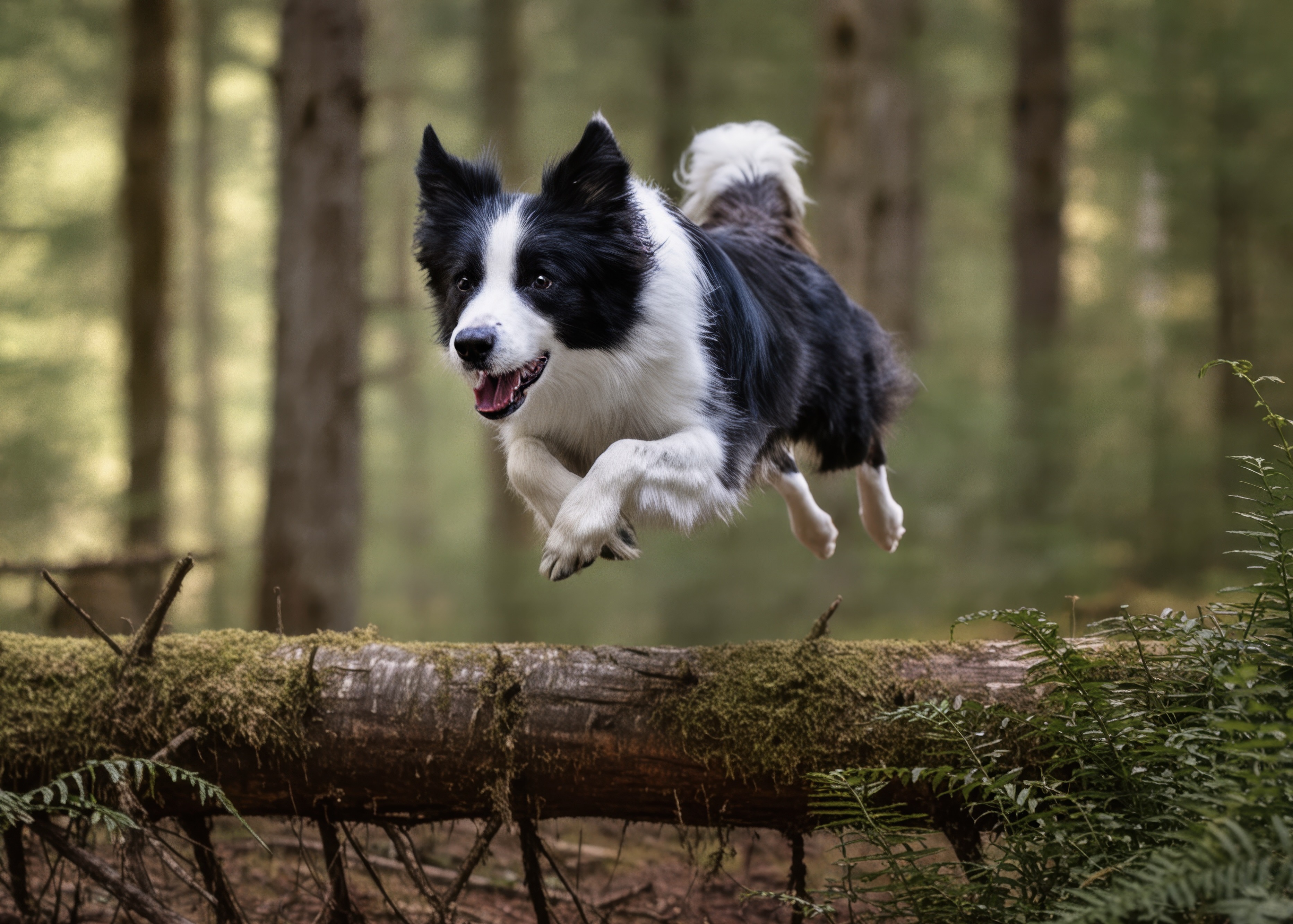
During this long, dull period, my thoughts were often on Baxter and the joy she showed through her friendship. Others had pinup pictures of movie stars, porn stars, or girl friends above their consoles--I had a photo of Baxter, leaping over a log on his run to the cabin, his mouth wide open in a clownish grin, a perfect reminder of the pleasure life allows those who dare.
Not surprisingly, I chose not to re-up and was discharged spring of 1974. This was long before email or the internet. Emile had given his address as "Emile Adler, c/o Universidade Federal de Alagoas, Maceió, Alagoas, Brazil", and I gave him my folks' address, which he promptly lost. Letters to him were returned stamped "DESTINATÁRIO INEXISTENTE," which simply meant that, in the absence of a named department and known staff member, some mail clerk couldn't be bothered. We would not hear from each other for another year.
I was finally free of the anxiety I'd carried for so long. I was still young enough to believe I was immortal, that my relative poverty was trivial and short-lived, and that I was free to go where I wished, to explore and meander with no set purpose. After a long Greyhound ride back to California, I took the ancient vehicle out of storage, and decided to renew my acquaintance with West Lead, possibly find Emile, and, of course, reconnect with Baxter. In fact, I'm sure the last was the real reason for the trip. I had a vague fantasy of taking her off the collective occupants' hands, and making her the companion I'd always wanted.
The drive was about 10 hours, which I split over two days. The high desert of southwestern Utah is especially attractive in spring, and I slept under the Milky Way in all its splendor the first night. The next day, I arrived at the cabin around noon. Things were much the same as before, except the shingle roof had been replaced with copper, a smart move in a region that gets several feet of snow in the winter, sometimes all at once. The Rover wasn't there, even though I'd hoped it might be. Also missing was Baxter, who I half expected would have heard my sputtering engine and come bounding over to visit.
I left a note under the door asking about Emil, and included the Yucaipa address and phone number, as well as my motel in Cedar City. I would check in from time to time, and, with any luck, might locate him. In the meantime, I proceeded along the torturous route to my principal destination, West Lead.
When I arrived, I found the settlement abandoned--no humans, no chickens, no dogs. Some of the screen doors had been scratched to shreds by bears now free to do as they pleased. Gardens were dead and overgrown with weeds. The main hall was unlocked and nothing remained aside from the counter, showcase, and empty shelves. The roof had leaked, leaving a grungy spot on the floor near the entrance. Leaves had blown under the door, dust covered everything.
I was curious about the rest of the building. In the rear was a large open room At its near end was a small desk with a broken leg facing a black board which had seen frequent use, judging by the stubs of chalk on its shelf and powdery residue from hundreds of erasures. The last one was imperfect, and I could make out the words, "God hates gold...", trailing off into an undecipherable list, possibly of other things God hated. I also found some math and language worksheets lying about. There were regular marks on the floor left by desks which had been removed. This had been a school, without a doubt.
At the far end was a circular window with a view of the pines. A small table with a large, half-burned candle sat to its right, and some decaying chairs were arrayed haphazardly before the window. A waste basket contained a crumpled sign reading, "Septic tank clean-out Saturday. All Brothers must show up!" More marks on the floor suggested chairs and a lectern. I left through the side door and walked back to the front of the building, where I noticed Baxter's collar, complete with little hand-made tag on a granite fieldstone near the corner of the porch. A smaller rock held it in place. Unhappily, the scene suggested a cairn or grave. Or, perhaps the collar had been lost and was left in a safe spot in case the owner came back. Choosing to believe the unlikely alternate explanation, I resisted the temptation to pry up the rock and start digging. I left West Lead feeling sadder than when I'd arrived.
My coding experience with the military came in handy, and the following September, I was hired by the Department of Anthropology at UC Berkeley to do some database work. I had saved enough to make a down payment on an old cottage, redwood-shingled and -shaked, in the highlands east of the city, and commuted to work in the venerable but dependable bug. Although I wasn't on the academic staff, my position was permanent and the work was stimulating. Best of all, I didn't take the job home with me and had plenty of time for other pursuits.
On a crisp and foggy Saturday morning the following February, I received a forwarded postcard from Emile. The message was brief: would I phone him at his apartment in Berkeley where he'd just moved in January? He had something important to tell me. Without knowing it, we'd been on the same campus for over a month! I contacted him immediately and we spoke briefly. I told him about my recent visit to the cabin, the abandoned community, and Baxter's tag. He paused, then said he had to talk to me in person as soon as possible. We met that afternoon at Caffé Espresso, a well-known coffee house where we could hear ourselves speak. He was waiting at a table next to a window, and jumped up to hug me. After we sat, he began talking, almost explosively:
"I've been waiting forever to tell you this! A couple days after after you left, a van and couple of buses turned into West Lead. Something big was going down. I ran down Baxter's path and watched from a tree. Everyone was gathered near the big pine, some with boxes and suitcases. Baxter was in the middle of everything, trying to figure out what the game was. Adam finally tied her to the porch. The van showed up first. Adam and the men began loading it with furniture from the store and cottages. They were in a terrible hurry, like something really bad had happened. Then, the buses arrived and folks started getting on. After the van left, the remaining men joined the others."
"Baxter was going nuts! She didn't like being tied up. Adam shouted at her to sit, which she did immediately. And here's the terrible part, the thing I've wanted to get off my chest for so long." Emile was choked up, and I had a terrible foreboding. "He walked over to Baxter, took out his gun, and shot her in the head, no hesitation, no look of regret, not even a 'Goodbye' or a 'Good girl'. The people on the bus just sat there, staring straight ahead, except for a couple of the kids, who looked shocked."
"Before Adam got into their old Chevy truck, he turned and looked straight at me. He'd known I was there all along! He didn't care, maybe was pleased! The whole caravan then took off, who knows where, and none of them ever returned, thank God. I was shattered. I went back to the cabin, got a shovel, and buried her. You found the grave." By this time, he was rubbing his eyes with a napkin.
I've always found it difficult to cry, but I needed a moment to reply in a breaking voice, "You know, I think more than anything else, I came back for Baxter. You're my friend, it was just a matter of time before we got back together, but with a dog like her, independent, half-wild, you never know if you'll get a second chance... and we didn't."
Emile and I have been in contact ever since. Technology certainly made this easier, but, in reality, we've never been more than a couple hours distant. We both married, raised children who had children, and we all had many pets. We were uncles to each other's kids, and always present at milestones. But neither of us ever named a dog "Baxter" again. In those long ago days of exploration, learning to be alone, to be brave and independent, we thought only of beginnings, never of endings. None of this ever bothered Baxter, who thought every moment of her life was the best time to be alive.