The sun sneaks slowly above
	the eastern roofs and trees,
Deciding whether to awaken
	or linger awhile in sweet sleep,

And, as he has ever done, rises
	and releases from shadowy caves
Skinny long-legged women
	and their canine companions,

Who omnipresently patrol the town
	like floating spirits, migrating
Among streets and walkways
	their delicate feet skating on air,

Whispering quietly on meeting,
	planning routes and stratagems,
While lupine warriors of varied visage
	nose the air for scents of danger,

Until the sun, aloft from his nocturnal bed,
	shrugs away his sleepiness, and
Stretches his arms into mighty rays
	of blazing heat and light

Driving away the vigilant guardians
	of morning's first light, to vanish
In the coolness of their dark caverns
	waiting for the sun to rise once more.
The vanity lights above
	the bathroom sink

Cast a shadow of his hair
	while he brushes his teeth;

He sees dunegrass waving
	on Asilomar's sandy hills,

Framed by a gray-white sky
	and shoreline fog;

His mouth foam is whitecaps
	breaking beyond the dunes,

And the peppermint flavor
	is the balm on her lips

Joining hers to his
	in love's timeless lock,

As they embrace in the face
	of a cool and salty breeze,

The ecstatic passion of youth,
	youth of years upon years.
It was 1972. I had just graduated from UCLA, and, unlike my more ambitious fellow students, I'd made little preparation for my future apart from some last-minute applications for grad school. The specter of the Vietnam War loomed, my draft number was middling, and my educational deferments had ended. I had the summer to consider my options, which seemed bleak. I could get a deferrable job, go to school and risk being drafted, go to Canada, or go to prison. I needed time to think over the summer.
...
My roommate Emile invited me to his cabin in southern Utah, and I accepted. It seemed like a chance to make some plans in a tranquil setting. He suggested I visit a place called West Lead on my way, a couple miles off the main route. He assured me I'd be interested. "A small community, unincorporated, maybe 50 people, and very, very weird." He added nothing to this spare description. It was to be a surprise, and he wanted to see my reaction. I set out early June in my beat-up 64 VW Beetle. Emile's directions were torturous and not on my Chevron map. As I drew closer, the road became a heavily rutted, boulder-strewn path, but my little bug did well. The destination was an alpine valley in a small range rising from the desert floor, typical of the region. The hills were unexpectedly green with ponderosa pine and quaking aspen fed by snow melt and artesian springs. Temperatures cooled rapidly with increased elevation, helped by the shade of the mountain walls. There were no signs leading to West Lead. I wasn't surprised--I was told it preferred being forgotten. After two wrong turns, I found myself on a muddy trail with a few cottages in the distance, and a border collie running alongside, barking joyfully, trying hard to herd my car.
When you watch dog trials, you'll notice a common strategy -- dog runs in front of a bunch of sheep and crouches head down, eyes staring coldly. The sheep stop, move in a random direction, and the cycle repeats until they move correctly. This does not work with cars, not even little ones like mine. Exasperated, I pulled over to discuss things, and suddenly found her in the passenger seat, all grins and licking tongue. A very smart dog got what she wanted, quickly and efficiently.
She had a ratty nylon collar with a homemade tin-can tag. Small nail holes spelled "Baxter"--odd name for a female. I frequently talk to dogs -- they may not know what you're saying, but generally know what you mean. "OK, little friend, let's take a ride!" Her tail said, "Yes!" In a few minutes, the road made a big loop around a magnificent, broadly trunked pine tree circled by a short picket fence. We were in West Lead.
I immediately noticed the lack of power or telephone lines. Some paths lead to small homes and sheds. A large building lay just before the turn which seemed to be a general store of some kind. A wooden yoke stood in front holding up a large brass bell. I saw boys carrying books leaving a side door, and decided there was a school in the rear. All the structures were neatly maintained, though somewhat weather beaten. Several had gardens, and I could hear chickens in the distance.
Standing in front of the tree was a massive fellow with an impassive, rather stern expression. He leaned against the fence and his eyes followed me as I parked. Baxter jumped from the car and ran toward him. "Down!" he commanded, and she immediately lay on her belly, panting happily.
He was tall, muscular, late 40s. His clothes were obviously hand made but nicely so. The cloth for his shirt was hand loomed. I approached him, holding out my hand, and said, "Newton Fletcher." He ignored the hand and said, "Adam." He nodded toward the car. "We don't have gas, water, air, or parts."
"Oh, the car's in good shape. I heard about West Lead, and wanted to see it. Picked up a passenger along the way," I said, looking at Baxter. "Yours?"
"She's everybody's."
"I'm staying at the Adler's cabin a few miles up the valley. Know them?"
"May have heard of them. Don't know many outsiders. We keep to ourselves."
I motioned toward the building. "Is that a store? I could use a drink of water."
Adam stared at me. "It's a lot of things. You can get water there, but leave the girls alone!" He pulled back his shoulders and I saw a gun in his belt. "Nobody touches the girls except family and sanctified friends!" He was clearly not promoting West Lead as a holiday paradise.
It was a fine spring afternoon. The building had a wide veranda in front protected by a short spindled fence running full width. The main door was propped open. The screen was shut to keep out bugs and let in the breeze. Conversation inside was animated as I walked across the porch and through the door, but stopped when I entered. All eyes were on me, some with contempt.
The room had a long counter over an old showcase. On it were a Coleman lantern and two kerosene lamps. Shelves along the walls seemed stocked a century ago: candles, bolts of cloth, bags of sugar, dried beans, combs and brushes, and on and on. There were four picnic tables with benches.. A man, woman and a handful of children sat at one. Several young girls in their early teens were scattered at the others, all in white dresses embroidered with flowers.
A middle-aged woman behind the counter finally said, "What do you need?" I asked for a bottle of water. She left for a moment and returned with a glass. "We don't carry the bottles," she said. I drank and reached for my wallet. She waved her hands as though swatting flies from the counter. "Don't need no money!" More silence. I put down the glass, thanked her, and left. As the screen door slammed behind me, talking resumed, mocking and excited. Friendly crowd.
Baxter tried to get in the car and I shooed her out. Adam strolled over. "She'll follow you for a mile or two and find her way back when she wants. Like I said, there's nothing here for you." Once I made my way to the crossroad, a couple miles of bad road took me to my destination. Baxter steered me effortlessly the entire way. The cabin was lovely, nicer in fact than many houses I'd lived in. In contrast to the community behind us, it had electrical lines, a large propane tank, and a green Rover in front. Emile heard us coming and was in the doorway as I parked. Baxter ran to him, whining and nuzzling, a familiar acquaintance.
Emile smiled. "Hey! Baxter here tells me you visited West Lead." We bantered on about the strange little town, Adam, his gun and girls. He confirmed my suspicions that the "general store" was a store, school, community center, and probably a church, although he'd never had any direct evidence of that. There were no obvious religious symbols around the building. Emile called it "the hall." As I'd guessed, they had no outside utilities. Water came in pipes from an artesian spring in the hills to a cistern nearby. Most food was home grown, and as I suspected, clothes were homemade. Money was avoided as much as possible, although they occasionally bought some necessities "down valley", meaning a trip to Cedar City, 50 miles away. This lead to another surprise--they owned a beat-up '54 Chevy pickup in one of the out buildings.
"And Baxter," I asked, "Where'd she get a boy's name?"
"She started out with a shepherd named Xavier who camped nearby. I'd known him a long time. He got her a couple years ago as a pup, and gave her a Basque name, Bakarn or some such. It means "Solitude" because of the way they lived. He died recently of a heart attack. He was an interesting old guy with a lot of stories, and somehow managed to get friendly with Adam. The dog was young and more or less inserted herself into the community after he was gone. The kids adopted her, and they turned her name into 'Baxter'. Adam found her a nuisance and taught her commands to keep her out of his hair. Baxter thinks Adam's the alpha and is anxious to please."
He continued, "You know, a lot of what I'm telling you is guess work. You probably know almost as much as I do. They don't like folks crossing the town line. I've only been there in person a couple times as a kid, but I sometimes spy on them. It's my little anthropology project. Xavier filled me in on some details--he was the only outsider I knew who got reasonably close. You may not have noticed, but in the afternoon around six, Adam rings the bell. Everyone gathers at the tree and then goes into the hall together. Not sure what they do then. Neither did Xavier." As if on cue, the bell rang in the distance. Baxter's ears perked up, and she was gone, running a well-used path back home. We were fairly certain that the bell also meant feeding time for her.
I spent the summer at the cabin until early September. I gradually lost interest in West Lead. Our only real connection was daily visits by Baxter, who was a delightful companion and an antidote to the depressive potentialities which had brought me to Utah. Emile was often absent, busy with family and other affairs. Baxter and I explored the forest, valley and rocky crags that surrounded us, and ventured more than once to the desert floor, which had its own stark beauty. The air was clean, perfumed with pine resin, the nights jet black and awash with more stars than I'd ever seen in my life, and the streams full of cut-throat trout, which became part of our daily fare--Baxter got the heads, and I got the rest. She never stayed past the sounding of the bell, a reminder that she was a free spirit with her own schedule, and just on loan to us.
Eventually, reality stumbled through our idyllic fog. Mail delivery was nonexistent. My letters were forwarded to the Cedar City post office which I visited every week. On a Monday early in the month, I received one from my draft board reading, "Greetings, You are hereby ordered for induction... ." I was to report on the 18 of September, two weeks away.
Emile had an admirably high draft number, and decided to take a gap before starting grad school. He had applied to statistics programs at several universities with the proviso that he not begin for a year or two. During his undergraduate studies, he'd become friends with a Brazilian mathematician who invited him to help with a study modeling sugar cane production. It would be a short term internship with opportunities to tour the region and have an adventure. He enthusiastically accepted.
He was at the cabin when I got my notice, and we spent a couple days hashing out options. For a number of reasons, I finally decided to report to the board and take my chances. I was naive about duty and honor, and what it meant for someone else to take my place if I skipped out. Since my half-hearted interest in further education had been interrupted, I decided to follow my first passion and become a writer. I rationalized that war would be an interesting life experience contributing to my new vocation.
I packed my limited possessions and prepared to head to the induction center in LA, not far from my hometown,Yucaipa. I said my farewells to Emile and Baxter. For her, that meant playing fetch, rolling around in the dirt, and getting wet in the stream before I finally got in the car and drove off. She definitely didn't understand goodbyes, and seemed just as happy leading me out as she'd been escorting me in a few months before.
I paid my folks and some friends a brief visit, and then entered the army. After testing and basic training, Uncle Sam discovered I had some useful programming talents, and I was stationed two years at the fledgling Center for Army Analysis in Bethesda. I was the least exciting kind of spy imaginable and spent my time doing statistical analyses of intelligence data. I never once set foot outside the United States.
In one way, I was relieved, although quite bored for the duration. On the other hand, I had been psyching myself for events of an ultimate nature which would have tested my endurance and courage in the chaos of battle. Now, there would be no exotic romances, no forays into steaming jungles, no internal existential conflicts, no journal entries on the horrors of war, no bonds of camaraderie--in other words, nothing which would inform my newly intended career, other than the writing of COBOL and FORTRAN, acronyms I'd come to find distasteful.
Not, I must hastily add, that coding per se was abhorrent--just doing it for the military. I knew that every line I wrote in the comfort of my air-conditioned surroundings led to slaughter in faraway places in a war that never made sense and was the very definition of barbarism. I was surprised how many of my colleagues agreed, yet we kept our heads down and persevered, each with his or her own private rationalization, all of us feeling a bit spineless.
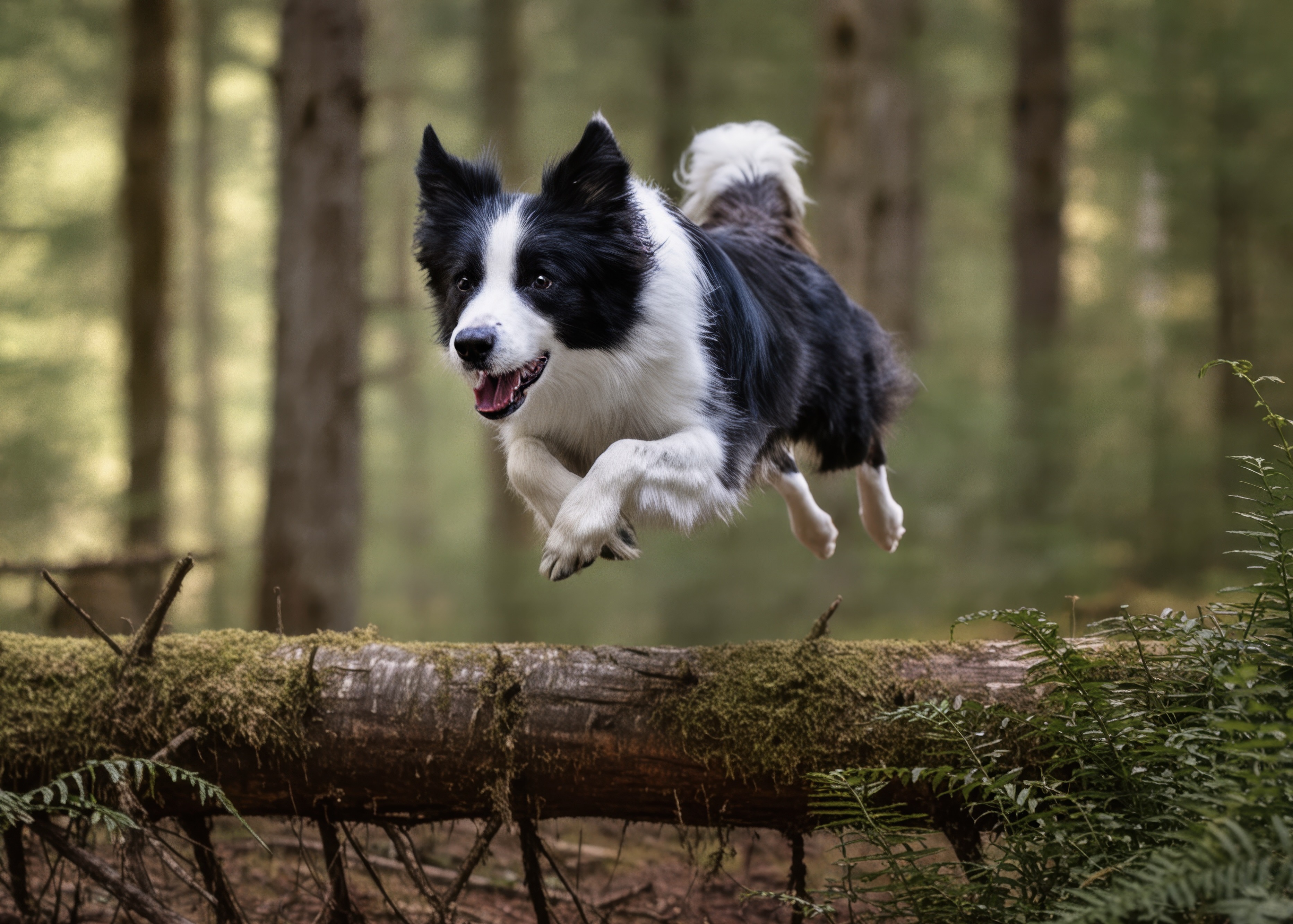
During this long, dull period, my thoughts were often on Baxter and the joy she showed through her friendship. Others had pinup pictures of movie stars, porn stars, or girl friends above their consoles--I had a photo of Baxter, leaping over a log on his run to the cabin, his mouth wide open in a clownish grin, a perfect reminder of the pleasure life allows those who dare.
Not surprisingly, I chose not to re-up and was discharged spring of 1974. This was long before email or the internet. Emile had given his address as "Emile Adler, c/o Universidade Federal de Alagoas, Maceió, Alagoas, Brazil", and I gave him my folks' address, which he promptly lost. Letters to him were returned stamped "DESTINATÁRIO INEXISTENTE," which simply meant that, in the absence of a named department and known staff member, some mail clerk couldn't be bothered. We would not hear from each other for another year.
I was finally free of the anxiety I'd carried for so long. I was still young enough to believe I was immortal, that my relative poverty was trivial and short-lived, and that I was free to go where I wished, to explore and meander with no set purpose. After a long Greyhound ride back to California, I took the ancient vehicle out of storage, and decided to renew my acquaintance with West Lead, possibly find Emile, and, of course, reconnect with Baxter. In fact, I'm sure the last was the real reason for the trip. I had a vague fantasy of taking her off the collective occupants' hands, and making her the companion I'd always wanted.
The drive was about 10 hours, which I split over two days. The high desert of southwestern Utah is especially attractive in spring, and I slept under the Milky Way in all its splendor the first night. The next day, I arrived at the cabin around noon. Things were much the same as before, except the shingle roof had been replaced with copper, a smart move in a region that gets several feet of snow in the winter, sometimes all at once. The Rover wasn't there, even though I'd hoped it might be. Also missing was Baxter, who I half expected would have heard my sputtering engine and come bounding over to visit.
I left a note under the door asking about Emil, and included the Yucaipa address and phone number, as well as my motel in Cedar City. I would check in from time to time, and, with any luck, might locate him. In the meantime, I proceeded along the torturous route to my principal destination, West Lead.
When I arrived, I found the settlement abandoned--no humans, no chickens, no dogs. Some of the screen doors had been scratched to shreds by bears now free to do as they pleased. Gardens were dead and overgrown with weeds. The main hall was unlocked and nothing remained aside from the counter, showcase, and empty shelves. The roof had leaked, leaving a grungy spot on the floor near the entrance. Leaves had blown under the door, dust covered everything.
I was curious about the rest of the building. In the rear was a large open room At its near end was a small desk with a broken leg facing a black board which had seen frequent use, judging by the stubs of chalk on its shelf and powdery residue from hundreds of erasures. The last one was imperfect, and I could make out the words, "God hates gold...", trailing off into an undecipherable list, possibly of other things God hated. I also found some math and language worksheets lying about. There were regular marks on the floor left by desks which had been removed. This had been a school, without a doubt.
At the far end was a circular window with a view of the pines. A small table with a large, half-burned candle sat to its right, and some decaying chairs were arrayed haphazardly before the window. A waste basket contained a crumpled sign reading, "Septic tank clean-out Saturday. All Brothers must show up!" More marks on the floor suggested chairs and a lectern. I left through the side door and walked back to the front of the building, where I noticed Baxter's collar, complete with little hand-made tag on a granite fieldstone near the corner of the porch. A smaller rock held it in place. Unhappily, the scene suggested a cairn or grave. Or, perhaps the collar had been lost and was left in a safe spot in case the owner came back. Choosing to believe the unlikely alternate explanation, I resisted the temptation to pry up the rock and start digging. I left West Lead feeling sadder than when I'd arrived.
My coding experience with the military came in handy, and the following September, I was hired by the Department of Anthropology at UC Berkeley to do some database work. I had saved enough to make a down payment on an old cottage, redwood-shingled and -shaked, in the highlands east of the city, and commuted to work in the venerable but dependable bug. Although I wasn't on the academic staff, my position was permanent and the work was stimulating. Best of all, I didn't take the job home with me and had plenty of time for other pursuits.
On a crisp and foggy Saturday morning the following February, I received a forwarded postcard from Emile. The message was brief: would I phone him at his apartment in Berkeley where he'd just moved in January? He had something important to tell me. Without knowing it, we'd been on the same campus for over a month! I contacted him immediately and we spoke briefly. I told him about my recent visit to the cabin, the abandoned community, and Baxter's tag. He paused, then said he had to talk to me in person as soon as possible. We met that afternoon at Caffé Espresso, a well-known coffee house where we could hear ourselves speak. He was waiting at a table next to a window, and jumped up to hug me. After we sat, he began talking, almost explosively:
"I've been waiting forever to tell you this! A couple days after after you left, a van and couple of buses turned into West Lead. Something big was going down. I ran down Baxter's path and watched from a tree. Everyone was gathered near the big pine, some with boxes and suitcases. Baxter was in the middle of everything, trying to figure out what the game was. Adam finally tied her to the porch. The van showed up first. Adam and the men began loading it with furniture from the store and cottages. They were in a terrible hurry, like something really bad had happened. Then, the buses arrived and folks started getting on. After the van left, the remaining men joined the others."
"Baxter was going nuts! She didn't like being tied up. Adam shouted at her to sit, which she did immediately. And here's the terrible part, the thing I've wanted to get off my chest for so long." Emile was choked up, and I had a terrible foreboding. "He walked over to Baxter, took out his gun, and shot her in the head, no hesitation, no look of regret, not even a 'Goodbye' or a 'Good girl'. The people on the bus just sat there, staring straight ahead, except for a couple of the kids, who looked shocked."
"Before Adam got into their old Chevy truck, he turned and looked straight at me. He'd known I was there all along! He didn't care, maybe was pleased! The whole caravan then took off, who knows where, and none of them ever returned, thank God. I was shattered. I went back to the cabin, got a shovel, and buried her. You found the grave." By this time, he was rubbing his eyes with a napkin.
I've always found it difficult to cry, but I needed a moment to reply in a breaking voice, "You know, I think more than anything else, I came back for Baxter. You're my friend, it was just a matter of time before we got back together, but with a dog like her, independent, half-wild, you never know if you'll get a second chance... and we didn't."
Emile and I have been in contact ever since. Technology certainly made this easier, but, in reality, we've never been more than a couple hours distant. We both married, raised children who had children, and we all had many pets. We were uncles to each other's kids, and always present at milestones. But neither of us ever named a dog "Baxter" again. In those long ago days of exploration, learning to be alone, to be brave and independent, we thought only of beginnings, never of endings. None of this ever bothered Baxter, who thought every moment of her life was the best time to be alive.
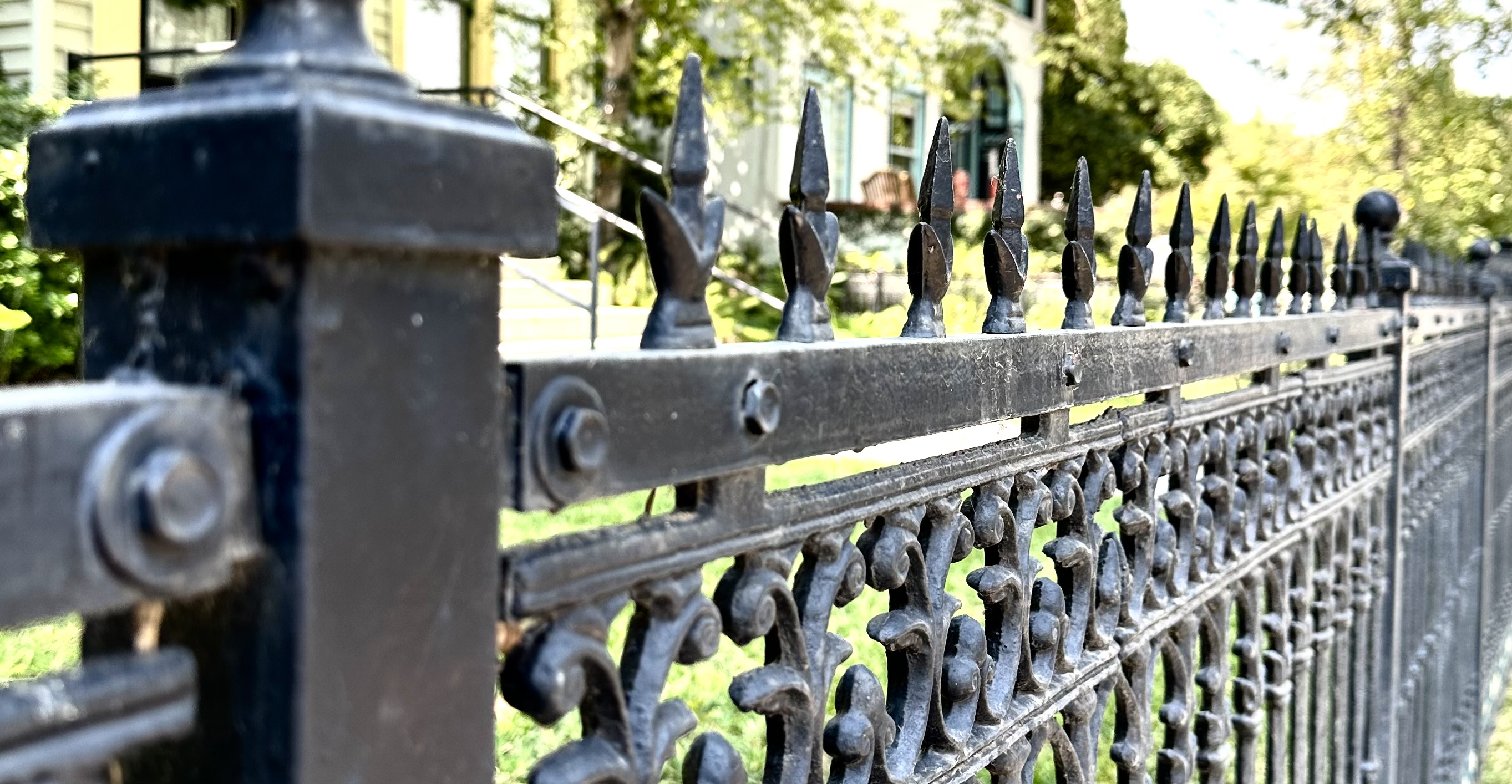
Rousseau's spiked fence was
    tall, ornate, intricate,
a cast-iron invitation
    to a gracious impalement.

Education must, said he,
    let the child choose
to walk that fence,
    to learn not to walk that fence.

Skipping along its ridge
    is an ecstasy of defiance,
and tripping, a humiliation
    of pain and scars.

The child is the child's
    teacher; there are no grades,
though the dead perforce
    will fail the course.
The "Child on a fence"
example is apocryphal
and probably the most
famous quote Rousseau
never said. It is an
extrapolation of his
theory of childhood
education in his book
"Emile", arguing that
children must be allowed
to educate themselves.
Only by suffering the
consequences of doing
something unwise will
the child learn not to
do it, even if the act
of learning involves
discomfort or pain.
This squat edifice, toad-like and beautiful
   in its Doric immobility,

Clings fast to the earth and holds
   heavens high in their place,

A thing of mass, of solidity, of safety
   for thinkers and gods within;

A temple of Pythagoras, who drifts
   among columns, circles, angles,

Who gathers with ethereal colleagues
   around a great hewn table

To debate the path to Truth absolute,
   and other worthy futilities.

Late at night their voices sound
   like the breeze-ruffled owl asking, "Who?"

And the tired carping of crows, trying
   to sleep in their dark canopy above.
Slender stems
      green-feathered,

Shimmying, shimmering
      in morning light,

Earth-bound sprites
      tall, at ease

Awaiting the breeze,
      waiting to dance.
The previous poem, "Dancers",
demands a photo, which was the
idea. However, a kind reader
pointed out that it can't stand
on its own. It would fall flat
if read to an audience without
visual aids.

The current poem is an exercise
in disconnecting the two. The
title and first few lines
imperfectly recreate the picture.
As a result, this version can
be read over the radio!

Horseweed (Erigeron canadensis)
is native to western North
America, and has since spread
worldwide. Indigenous peoples
have touted its curative powers
for several ailments. Farmers
hate it because it's invasive.
Horseweed neither loves nor
hates anything--it just wants
to dance.
      Now

They found on that black wall a picture hung
      as if it swam in empty space itself,

And saw a mask grotesque and dark, ensnared
      in webs of rotting filth and foul decay.

He looked away and to his friend he spoke,
      "It says destruction comes, torment and pain,

All life shall suffer bitter ends," to which
      his kind companion said in gentle tones,

"Do you not see the plucky weeds below,
      whose green is life resisting fate's design?"

"Of course," he said, "we could invert your view,
      and say the last of life is soon consumed."

"Perhaps," she pleads, "we are not meant to choose,
      but thrash about all possibilities."

A picture says a thousand words it's said
      but here they found just two, despair and hope,

All while the picture sends the audience
      ten-thousand years of dark philosophy,

The pair of kids who dwell in black and white,
      now swim in Chaos' lively sea, and laugh

With joy at never knowing who they are,
      but always loving blesséd argument.


      Then

The artist was dispirited and frowned,
      his muse was gone, the painting uninspired,

And so, quite tired, he put it to one side,
      began the tedious task of cleaning up.

While shaking out a brush of viridian hue,
      it slipped away and clouds of droplets flew

Onto the half-done canvas lain to rest,
      when she came in, kimono'd and concerned,

His muse, amanuensis, and kind friend,
      "I heard you yelp and curse, and... Oh, what's this?"

She held the reject in the light and smiled,
      "This really is provocative, so sad

And yet quite angry, and the green's just right!"
      He slipped his arm around her waist and bent

His face to hers, they danced a silent turn
      or two about the messy atelier.

He said, "You once again have saved my heart!"
      She dropped her silken robe, and fell into his bed,

And when a week had passed, the paint had dried,
      the painting hung upon the gallery wall,

With bread and cheese and wine, beside the sea,
      they laughed at the vanity of Art and all.
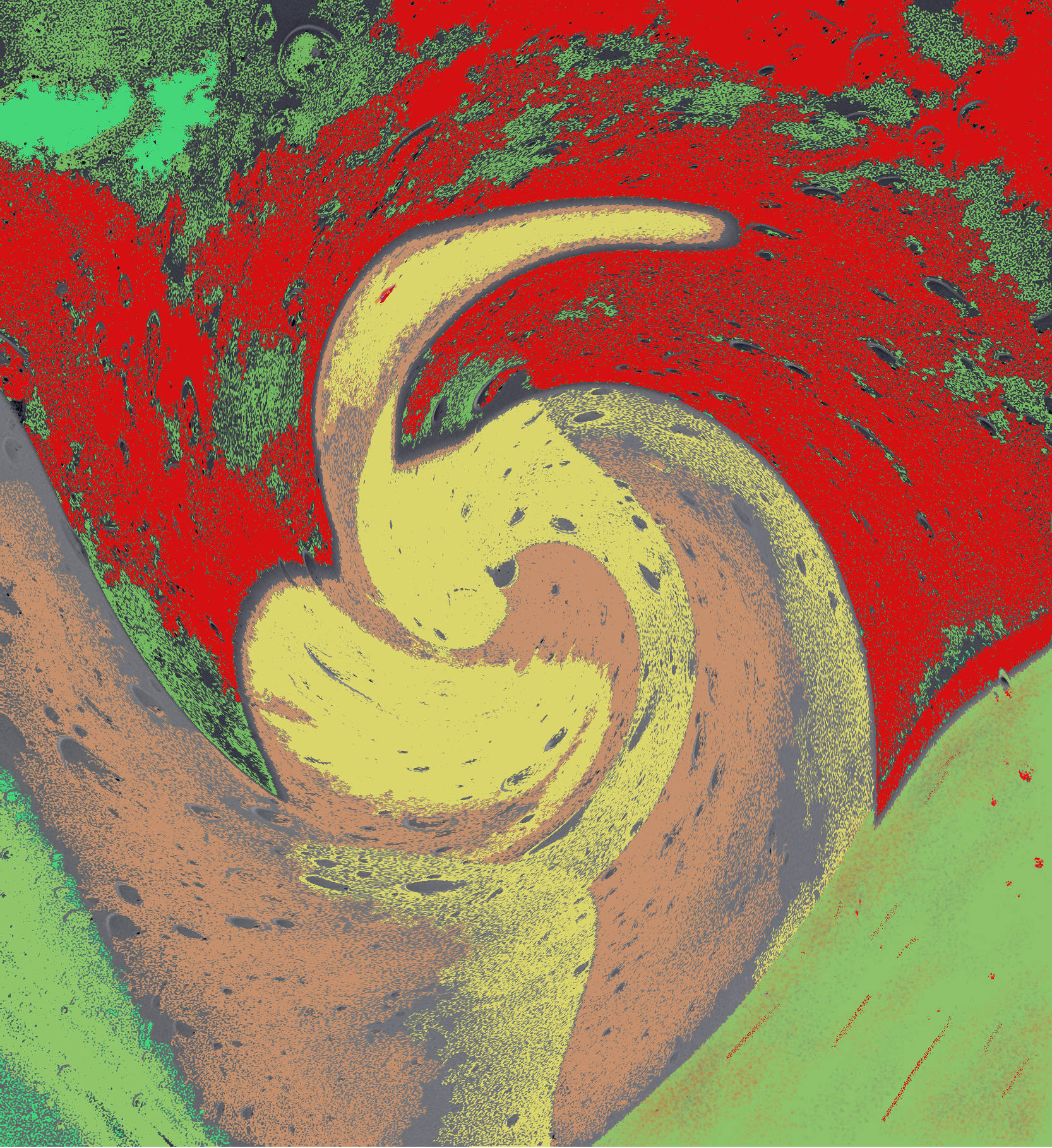
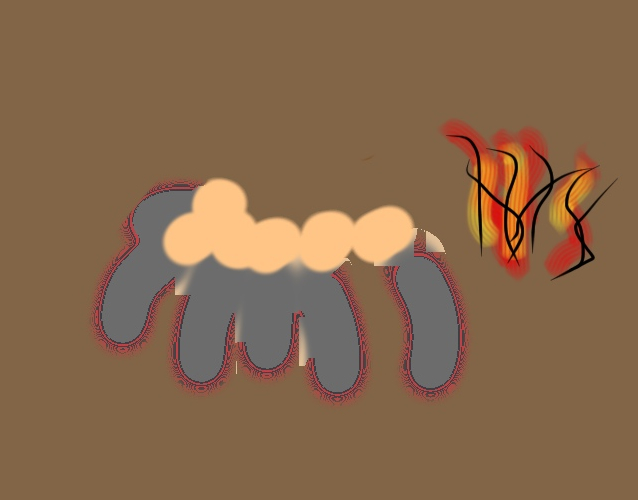
                The image is from Google Maps, showing a 3 acre
                plot north of Davis, California, coordinates
                38.57778, -121.78709, from a satellite photo
                made January 8 2024. It was probably a burn pit
                for trees culled from a surrounding grove. It and
                the adjacent land have since been converted to a
                field of hard red wheat, with no visible trace
                left of its previous identity.
Resting through a cold, while breathless,
      he lay in a reverie of lassitude,

Knowing the pure pleasure of
      a good excuse for sloth,

And, drifting into that lethean land,
      saw himself lying on the sand

By a grotto, when from behind a pillar
      seductively stepped a nubile nymph,

Clothed only in the breeze
      and a garland of golden kelp.

As she approached, she dissolved
      into a dog who shook herself

Into a storm of salty drops
      while seals on their cozy shelves

Bayed and barked their laughter,
      awakening him to the pressing need

To breathe and find his way
      back to his blue-skyed world.


             The image came from this site.
The pretty engineer took his arm
    at the tunnel entrance;
They walked a mile
    into the middle of the Andes,
    into a frigid inferno.

"We've passed the border", she said,
    facing the whine and grind
Of a giant rolling worm,
    flashing sparks and lightening,
    as it pushed into Argentina.

They returned to sunlight and ice,
    and she handed him a stone,
An unsuccessful flirtation
    as he released her hand,
    but kept the rock.

She stammered about sensitivity
    to air, humidity, temperature,
"In a hundred years it will be gone,
    unlike love...".
    He shrugged and left.

The stone, grey and white,
    sat for months on a shelf,
Unchanging, leaving only dusty fingertips.
    He was relieved when it was lost --
    A century was too long to wait.


            The feldspar image is copied from
             the Minerals Database of the
            "Minerals Education Coalition"
He wore the shirt she met him in
      for many days, a week he thought,

Then finally she dared to speak,
      "Your shirt, it reeks, please wash it soon!"

She might as well have slapped his face,
      and yet they still fell fast in love,

But after this, his shirts were clean,
      were always different every day,

Since at the laundromat he found
      a plastic bottle green in hue

Containing simple laundry soap,
      the secret elixir of love.
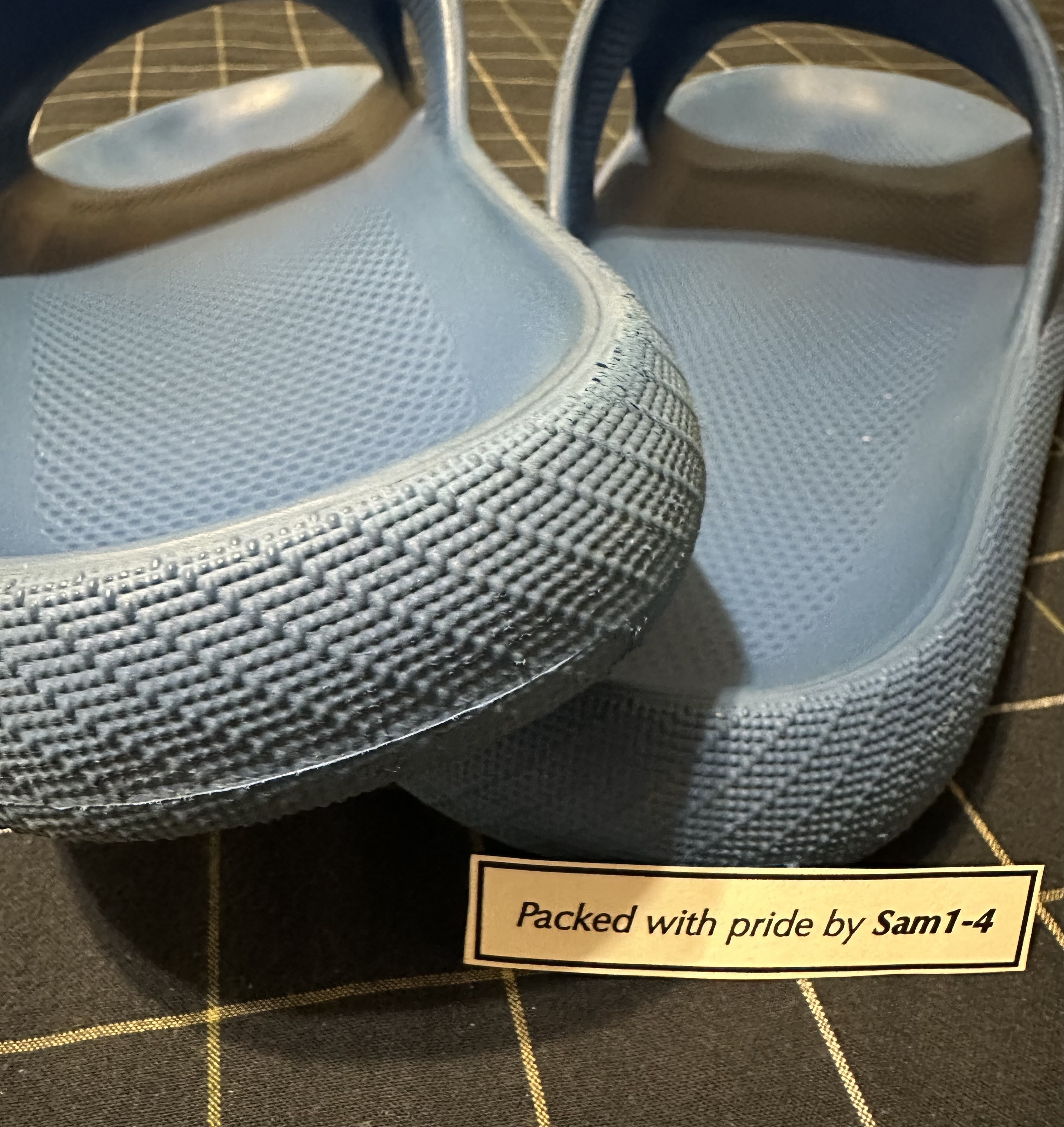
Sam1-4 wrote from afar
    (I'd never met or heard of him)
    in a box of sandals, blue,

A note, quite brief, which simply said,
    'Packed with pride by Sam1-4'
    (sweet he thought that I should care),

And, mused I, that Sam must be
    a kind and gentle working man,
    perhaps a sort I'd like to meet,

Though almost certainly he speaks
    a tongue quite strange, unknown to me,
    like bird song mixed with clicks and halts.

In my mind I greeted him,
    "Hello, dear Sam1-4, good soul!
    How pleased I was to get your note."

And he replied, "My dear new friend!
    How fine it is to hear from you!
    You are the first one to reply."

And so we garrulously spoke
    on many topics, low and high,
    women, books and moons above,

Until the man from Porlock knocked,
    (the interruptor famed of old)
    who broke apart my reverie.

I know that Sam1-4 and I,
    shall speak no more, and I shall miss
    conversing with this distant friend,

Who, if were found, could only speak
    with smiles and tears and waving hands,
    as he outside my head would be.
He saw the Mona Lisa on
      an ancient wooden power pole
      one San Francisco chilly day,

Surrounded by a murky fog,
      a thing of strange consistancy,
      a soft translucent wall of air

Pushed aside his probing hand,
      he tried but could not touch the child,
      still smiling through five hundred years.

A crowd assembled, curious
      at his pale arms grabbing air,
      "What are you doing?", asked a girl.

"Don't you see?", the man replied,
      "Her face, her lips, her guile and charm,
      the slyness in her gentle grin?"

A boy, quite small, ran to the post,
      and said, "I see a poster there.
      It says, 'Reward for my lost cat!'"

They smiled and laughed, not at the man
      but just the gentle joke of it,
      as thickening fog spread round about.

He turned and moved into the crowd,
      now silent, gray as lumps of clay,
      they fade into the darkened day,

While, down the street, the boy cried soft,
      "Here, kitty, kitty! Here, kitty kitty!"
      The man, alone, remained distraught.

He turned and faced the splintered post,
      which smelled of creosote and tar,
      and saw that she remained aloft,

She smiled at him and knew his soul,
      his secrets, sins, and failed loves --
      naked, though still clothed, he shrugged,

He walked away, his eyes held low,
      and, guided by low booming horns,
      he found himself at water's edge,

And took the ferry waiting there
      across the cold and choppy bay
      to an empty house so far from her.
Chaos writes with windy pen
      on dunes of sand and frothy sea,
      cirrus clouds aloft, and then
Erases all before we see
      the transient text that's hid therein.

She makes a breeze beneath our door
      and tricks us with her icy chill,
      freezing feet both rich and poor,
Whispers with a voice quite still,
      while scuttering frost along the floor.

Carefully mounded garden leaves
      spout up in twisting jets of air;
      she throws them up into the eves
And casts them down upon our hair;
      confusion reigns while she deceives.

She moves the air in many ways,
      a gentle touch, a typhoon's blast
      slanting rains from storms just past;
She whimpers, rages, laughs for days,
      the words she babbles forth don't last.

So, though the message can't be read,
      still, it's plainly understood,
      that Chaos birthed our world and said,
"My work is neither bad nor good,
      in fog you stumble, then you're dead."
His mother told him many times
   a bird most striking had appeared
   in the window at his birth,

How calm she felt the last hard push
   which shot him forth into the world,
   as red and yellow feathers flared.

      ...

In the woods, the fire burnt out,
   an old man left the child there
   with tales of gods aflight.

The boy had felt the ashes, cold,
   startled at some thrashing wings,
   seen glints of color in a tree.

      ...

His guide was pointing to three birds,
   flying through a sulfurous cloud
   at craters's lip where they fell dead;

The hiker sensed a whir
   and saw at vision's edge
   a brilliance fleeing molten rock.

      ...

On his walls were pictures --
   quetzal, peacock, red macaw,
   golden pheasant, scarlet ibis;

His questions lay in ancient myth,
   memories shimmered through his day,
   his dreams at night kaleidoscopic.

      ...

She was above him, rouge and gold,
   nuzzling hair with avian kisses,
   feathers falling over him,

And sang,

   "Miss you so, love you so!"

   He felt her answer brush his cheek,
   his last breath smiled, and then he flew.
Despair of yellow if you wish — The taint of choleric bile, Midas’ daughter, snow pee, jaundiced eyes. While Orpheus’ golden lyre went to Hell and back, sunlight echoed on dayend clouds, towheads ran on Baltic sand, dandelions colored my hand. Jacob’s stairs still ascend — presumably to Heaven — But who waters the geraniums?
Early morning fogs
   rose from the river.

He waded through an eddy of
   warmth swirling slowly
between bank and goal,
a heavily wooded island,
   cloud hidden,
Spanish mossed limbs
   penetrating
   opal curtains.

He felt time evaporate
   a hundred million years
as he entered the past earth.
and knew the river damp smell
   was once familiar
   to a dinosaur,
that nothing had changed,
that his particular world's
   sights and sounds
   were truant.

Reaching shore, he had
   no idea how close he was
   to the nest of guarded eggs,
as she burst forth through fog,
   the Great Blue Heron,
screaming in the
   very rasp of God,
   a cry so terrible
that he became a
   wee twitchy creature,
   scurrying to evade
scaly winged masters
   of this new world.
"I'm sorry about the Moon...", he said.
"Oh! What an interesting sentence!",
        she replied,
smiling with unexpected delight.
Love illuminated them
in the recovered lunar glow.
The Demon-Casters of Asilomar,
   in the great lodge room,
   huddle before fire,

Ess-word mutterings float,
  "...sssalvation...,
   ...sssatan...,
   ...ssssin...",
   potent, frequent
   "...Jesssusss...".

Bowed backs as
   shields,
Stares as
   needles, knitting,
White thin lips as
   prophet, knowing,

But no
   blue eyes on the
   lurking heathens
   (who suck your soul),

No
   flirtation,
   temptation,
   touching the
      unwashed.

This is a joyless,
   serious pursuit,
Saving the world.
My friend, the under-employed artist, sold photos to the Sunday edition of the paper. Strictly freelance, not a regular job. “Shoot anything but put three kids in the middle, in red, blue and yellow.” The formula never failed. Every Sunday, $25. It paid the rent.
I worked nights in Brazil, photographing stars. Coming home one morning, I found the neighbor kids gathered around the curb. All year, a trickle of water ran beside it, starting from a neighbor’s farm and moving down through the prosperous community below, eventually draining into the Rio Potengi.
“What’s up?”, I asked.
“Fish!” they answered.
They were on their knees, giggling, hands in mud and water. I walked over, expecting floating toys of sticks and leaves, but saw little flashes of color. A child’s cupped hands held a small, brightly hued fish darting in a bit of water.
I knelt beside the rivulet and saw hundreds of tiny finned creatures slipping through fingers of little people delighted by their beauty.
I lived a few degrees from the Equator. These were tropical fish, the real thing. They weren’t in an aquarium in a doctor’s office. They lived free in their home, my gutter.
Living in Natal, Brazil, was time travel. Evenings, we strolled and conversed lazily, danced at the social clubs, visited the dying in front rooms, surrounded by friends, and went to the barber for a shave — hot towels, straight razor, funny jokes and a rubdown, all for a dime, like an old movie.
Once, I was having a haircut. A man with no legs came in, selling lottery tickets. He maneuvered on a roller board, head about knee high. Everyone knew him. A few bought tickets, and he moved past the line of chairs where he waited. Why was he still there?
The barber to my right finished a guest and turned to the lottery agent. “Same as ever, José?”, who nodded. In a fluid motion the barber lifted him from board to chair. Question answered — a customer, like everyone else, and a frequent one.
A sheet billowed out and was pinned behind his neck, steaming cloth applied, and the conversation continued without break. A few minutes later, towels removed and face skillfully shaved smooth and clean, followed by a brisk massage. Second puzzle — the barber was in no hurry and the next patron seemed happy where he was. Gossip, sports, politics, weather flowed as ever in that global mens’ club. José smiled and chatted, a member in full standing.
I was done. My barber spun me about to face the grand mirror on the wall of every barbershop. “What do you think?”, “Looks great!”, universal query and response. My eyes strayed to the salesman’s reflection, head level with mine, great sheet before him down to floor. Puzzle solved. José sold them lottery tickets and a chance at riches. They sold him a shave — and added legs for a few minutes every day.
On cold winter mornings
	in Santiago,
	I wanted a typewriter —

I looked at the machines
	in the repairman's window
	each day as I walked to work —

There was winter prose,
	trapped in the keys,
	waiting liberation —

I always passed by,
	never entering once —

All that English
	still languishes cold
	in Chilean solitary.
Waiting is
	gray and cold
	even in summer —

Jorge waits in line
	two hours a day —

And Norman says
	when he's in line
	he's doing something wrong —

Queue shortening,
	fruit ripening,
	tank filling,
	baby entering world,
	life ending,
		most tedious of all —

Always in the future,
	unfulfilled anxiety.
Friends, lovers and enemies
	are the line —

Alive, feeding itself
	each other's memories
	fusion of parallel parts,
	forming and reforming
	during lifetimes —

I intersect an instant
	and live a series of isolations
	in a queue alone forever
		and quickly forgotten.
Two old cats live with me,
	as healthy as two year olds,
	each patiently hating the other
	and loving me these many years —

Universal constants,
	I should have named them
	Hubble and Heisenberg.
Rolls, babysitter, medicine, coffee,
	you're on my mind —
Try to work, talk, talk, talk,
	you're still there —
Checks, flowers, books,
	(once, you wrote to me)
Cook, dishes, pack, eat
	(your eyes across the table)
Tired, exhausted, lonely,
	sleep — bed.
A spruce of some sort,
	dense with painful needles —

Somewhat taller than
	the six year old
	who had taken a sudden interest
	in something other than a Star Pine
		bent double with
		its weight again in ornaments —

After twenty years,
	that scent of indoor conifer
	was ecstatic.
Today, I talked and talked
	about bacteria and
	other little things —

I talked and talked and talked
	while snow fell outside,
		silently, gently, adding
			onto itself,
		blurring my morning tracks,
		burying my car,
		erasing colors, blacks and grays —

I left my white board
	covered with red circles,
	blue arrows and black words,
And entered my white world,
	soft white mounds
		on flat white planes,
	white sky,
		white air —

Speechless and lost.
Sun layered gold through green
	onto black snow
	Christmas morning —

Gwyneth, dog supreme,
	loped silent snow paws
	through light and dark
	of forest dawn —

Saw bear lumbering
		to winter sleep,
	bobcat,
	spruce bough settled,
		with curious gaze —
Gave chase at imagined nothings
	floating in air ice
	great dog noises snow-muffled
		making silence silenter —

Finally circles into white nest,
	smiling at bear protector,
	who dreams of crazy cat,
	who laughs at dog below —

Three creatures
	sensing a brief perfection —
		right place,
			right time.
"Crystal White Detergent"
	-- that's mine.
		'That's nice', he blew, no words.
	You knew just what he said,
		with that two-note thing,
		biting hard,
		filling cheeks,
			screaming
		tearful logic,
		love, much chaos:
'Pale wrist submerged'.
	'Beat that', he blew,
		and I, with
uncharacteristic hesitation,
	I ...groped, my
halleluahs submerged
	in
reverent suds
		in
	detergent discovered
		on a mental counter.
	One last challenge,
		he blew again:
'I cannot do this, cannot cannot Kana...'
		...who tail-waggled in,
		knowing her wordless name,
	tootled in puddly notes lazing low
		around his feet.
	She lapped up sounds and
		loosed me,
			forgotten --
	I was no man again, and
		he won,
			no words
	against my slippery syllables.

-- Eric Kofoid & Kelly Sullivan
"You must have someone
	from then —
	a trusted aunt or uncle?
	a family friend?
Who might remember
	more clearly,
	more objectively
	what happened?"

No one, not one
	from then
	that I can trust,
	who knew me,
	who won't tell.
You decided not
	to dance,
Instead, toured this
	salty valley
Added your tears to
	our great lake —
Missed us while not
	wanting us —
Thought I missed
	the point,
And didn't know I
	was in the car
	with you.
Last week's flowers wilted,
	petals fell,
	water fouled,
	thrown away with
		scraps of food —

"One bud"
	and she added a fern leaf,
	crinkly wrapper,
	red bow
		and smile —

Warmly taken,
	coldly received,
Rose lies ignored on
	sunny table,
	expanding,
		spreading,
	trying to be seen.
Purple paper comes
	in scores of shades —

An infinity of purples
	is no surprise —

But paper? ...who needs
	twenty five kinds of fuchsia folios?
I just need plain purple
	and can't find it!
Black-capped bandits
	in from Oregon,
Scattering last year's leaves,
Scaring the cat
	(white as snow lying about him),
Jumping, pausing, darting —
	chaos makers —

"Look, Aelric!",
	then gone,
	daddy's a liar —

What's in that mass
	of cherry limbs
that draws you back
	each year?
Ten years ago, I moved from Salt Lake to California and lost neighbors, views, streams, opera, a packet of poems from 1996, and so much more — but, last week I stumbled across the poems.
It was exhilarating and emotional, like coming out of a suicidal coma and finding life is wonderful after all!
Well… a little like that. Maybe just a touch, for this very specific event.
Hmmm… To tell the truth, life has actually been quite interesting this last decade. The discovery was a bit of a rush, a stimulant, an exhilarant, a mood elevator.
A better metaphor: Imagine that you discover that the little toe on your right foot, which you thought you’d chopped off with an axe 10 years ago, has all along been folded in a peculiar fashion under the other four toes, and that a little clever autochiropractic manipulation pops it right out — now when you prance on naked tippy toes around the house, everything feels just right.
More like that, perhaps, than the suicidal coma.
See them here, if you wish, but, for the most part, they are raving doggerel. They are purposefully scrambled. Do not try to find any thematic continuity in their arrangement.
-- with apologies to Bryan Singer

The worst is remembered longest,
	this cumulative burden
	overwhelms in time —
Such as, my morning angers,
	swirling out of
	evaporating nightmares,
	diaphanous, beloved —
These fifteen minute irritations
	parade twenty four hours
	through your brain
Like typing "Guatemala".
He looked like a stiff wind
	might blow him away,

White hair on
	bent white body,
Wrapped in flannel
	and painful age —

"See that man, Daddy?" —
	Who is he?
"Max, Daddy! That's Max" —
	What does he do?
"I don't know —
	He belongs to the school" —

Suddenly, I fear
	the bricks might crumble
	if Max does not return.
Troll phoned after
	twenty five years
	and asked about the hat —

I happened to be staring right at it,
	recently discovered
	in my child's closet —

A nameless Mexican beaurocrat
	was moved by a tale of the hat
		as gift of a dying lover
		and lost on a train —

He took pity — in two weeks
	a beaten package arrived,
	hat intact —

A Mayan heart believed
	and a lover was realized —

My friend,
	sensing some universal urgency,
	knew it was time to resurect
		this dead young woman,
		never born —

Her love undending,
	shielded me from
	sun and rain.
Someday, Aelric
	will push A against E,
	tuning identity
		with historical precedence —

The good king's ancient stone
	pressing down his bones
	has his letters that way —

The story and sanctifying
	sound of "ligature"
	will spare him and his name —

Who argues with
	dead royalty and
	a long word?
Jeff can't tell me why
	he looked through me
	for three months,
	seeing only fog in thin air,

Fears my future, says
	he'll fly me out, or
	I'll force him back to
	Salt Lake City,

Teeters on the edge of
	brilliant insanity,

Sees light in the Will-o-the-Wisp
	creeping along the runway.
Big guy,
	papers and coffee,
	notebook, scribbles —

Little guy,
	cookie crumbs, chocolate,
	curled up under coat —

A week's wait,
	it's good
	and no need to talk about it.
I extend phone line
	across bench
Talking science to
	a liar —

Outside calm,
	inside chaos —

A flask, empty, falls;
	sudden sound,
	discordant bells —

No anger,
	just broken glass
	sparkling on floor.
I prayed to Gita cat
	a simple request —

Speak into her ear
	as she sleeps,
Work a small miracle,
	just this —

Gita said, "Yes, of course" —

The required rituals,
	stroking, rubbing,
	tickling, warming,
I did them all —

"Patience", she purred,
	"Just wait" —

I did, and learned again,
	they lie, these cats,
When they say
	they're God.
Glass over pastry;
	scratches, hundreds,
	intersecting like frost --

Pies and goodies in
	soft focus,
	visual effect provided by
Anxious hands dragging
	hot cups for years
	towards craving bodies.
Tonight, my boy bathes
	for the first time alone —

"Daddy, get out, but
	you can leave
	the door open…"

Don't worry, I'm here —

"Daddy?"

Still here, Honey —

"I love you…
	I'm done…"

I'm not leaving,
	you're safe —

"I'll dry myself, but
	let me see you first…"

I'll be here a long time,
	until I'm imperfect again.
Today, you try to fool me —
	standing shakily,
	hobbling toward me
		with a smile,

Cataract eyes saying,
	"Much better now,
		really —
	younger feeling,
		like old times."

You scream in pain
	as I touch your side.

In we go,
	pills from my pocket
	into your mouth —

You drink deeply
	and for once I let you
	 eat anything you want —

You lie next to me
	pain replaced
	by tired euphoria —

Two hours of childhood dreams
	and you never knew
	when the needle touched your vein.
It was always simple —
	tip forward,
	feet rise from floor —

A sensation between
	tickled stomach and
	blushed face and
	levitate —

The trick was finding
	that feeling and
	letting it spread from
		chest to temples —

Once aloft,
	direction was effortless,
	speed erratic,
	and a view
		green and expansive —

My dream child flew alone,
	warm,
	safe,
	fearless —

I remember this well,
	with envy.
Snow, gone
	warm Pacific front —
	rained all day,
	Seattle clouds in Utah.

"Cold", she says —

	"But, we walked without
	our coats", I say —

"Yes, but it's wet and gray,
	definitely not warm,
	cold enought, and
	I feel the way
		I ought to feel —
The way I would feel
	if it were thirty degrees colder."
Good friend,
    old black beast,
    lying in snow,
    rises with pain —

Tail waves "Hello!"
    and continues:
    "You're here at last —
    You'll never guess the battles —
        first, birds, then
        squirrels, then
        kids walking by —
    Repelled them all —
    It was work, let me tell you
        but things are safe now
        for you and her
        and the kid
            and the cat."

"Another day" thinks God,
    "You get another day —
    Just keep talking, friend."
For the privilege
    of sitting now and
    sleeping later,

I drink this cup
    of bitter stuff,
    foul from neglect --

Medicine not for
    mind or body,
But known to cure
    a social disease.